The Last Two People on Earth Were in Phoenix: Melanie Martinez Brings HADES to Life
Photographer: Kili Goodrich
Melanie Martinez brought the dark mythology of HADES to Phoenix, filling the night with fire, fantasy and a little beautiful grotesquerie. Between photographing songs from the pit and getting swept into the crowd, I watched an audience completely surrender themselves to the world she built. Every scream, costume and candlelight fit in as another piece of the story.
Melanie Martinez
.𖥔 ݁ ˖
Melanie Martinez .𖥔 ݁ ˖
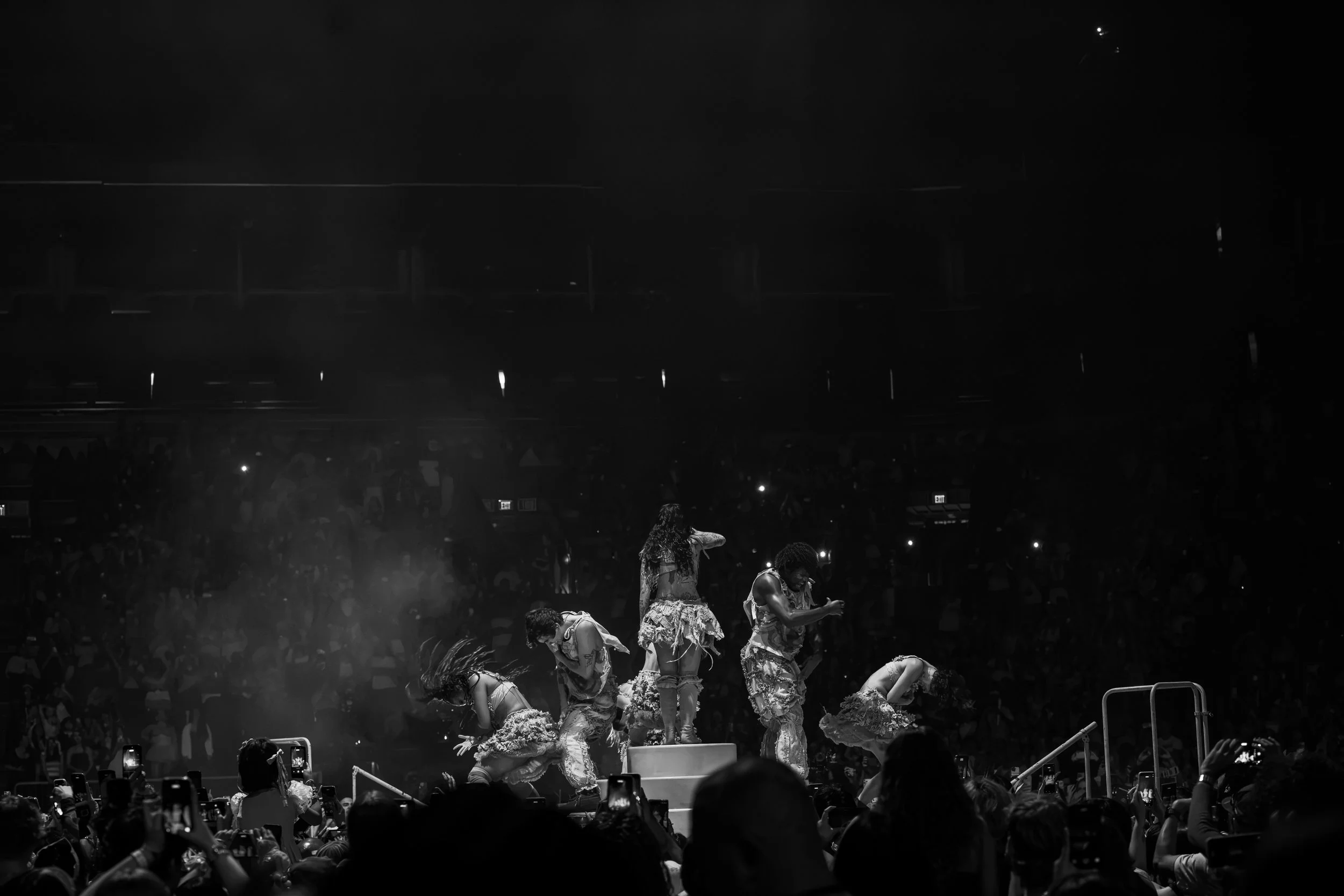

The love was there. In great capacity. On August 12, Melanie Martinez brought HADES: THE SACRIFICE TOUR to Phoenix’s Mortgage Matchup Center. Fans had come prepared to live inside her world. From the floor to the upper sections, fans dressed like walking pieces of Martinez’s mythology. Pulling from the visual language of Cry Baby, K-12, PORTALS and now HADES. Fans were shrill, loud and completely free in their adoration. Every entrance, costume change and familiar note sent another wave of screams through the arena. As a photographer, I experienced the first part of the show from inside the machinery of it all. Having photographed a few songs from the pit before eventually stepping away from the cameras and into the mold of the crowd. That change in perspective made the scale of the devotion even more obvious.

HADES, released earlier this year, is Martinez’s fourth studio album and marks a dramatic shift from the pastel childhood imagery of her earlier eras. The bright, toy-box world disappeared. In its place is fire, technology, religious imagery, isolation and the mythology of an underworld. The album follows Circle, a feral girl taken from her secluded life and manipulated by HADES Tech into becoming a manufactured pop star. Ultimately turning her into a sacrifice in the corporation’s effort to replace human artists with artificial intelligence. Onstage, that story was fiery and alive.
The concert began with Martinez emerging from a bed beneath a spotlight. Flames suddenly erupted as confetti scattered around her, introducing “Is This a Cult?” with theatrical punctuation. “Possession” and “White Boy With a Gun” pushed the story further into its darker territory. “Disney Princess” twisted the familiar fantasy into something more sinister.
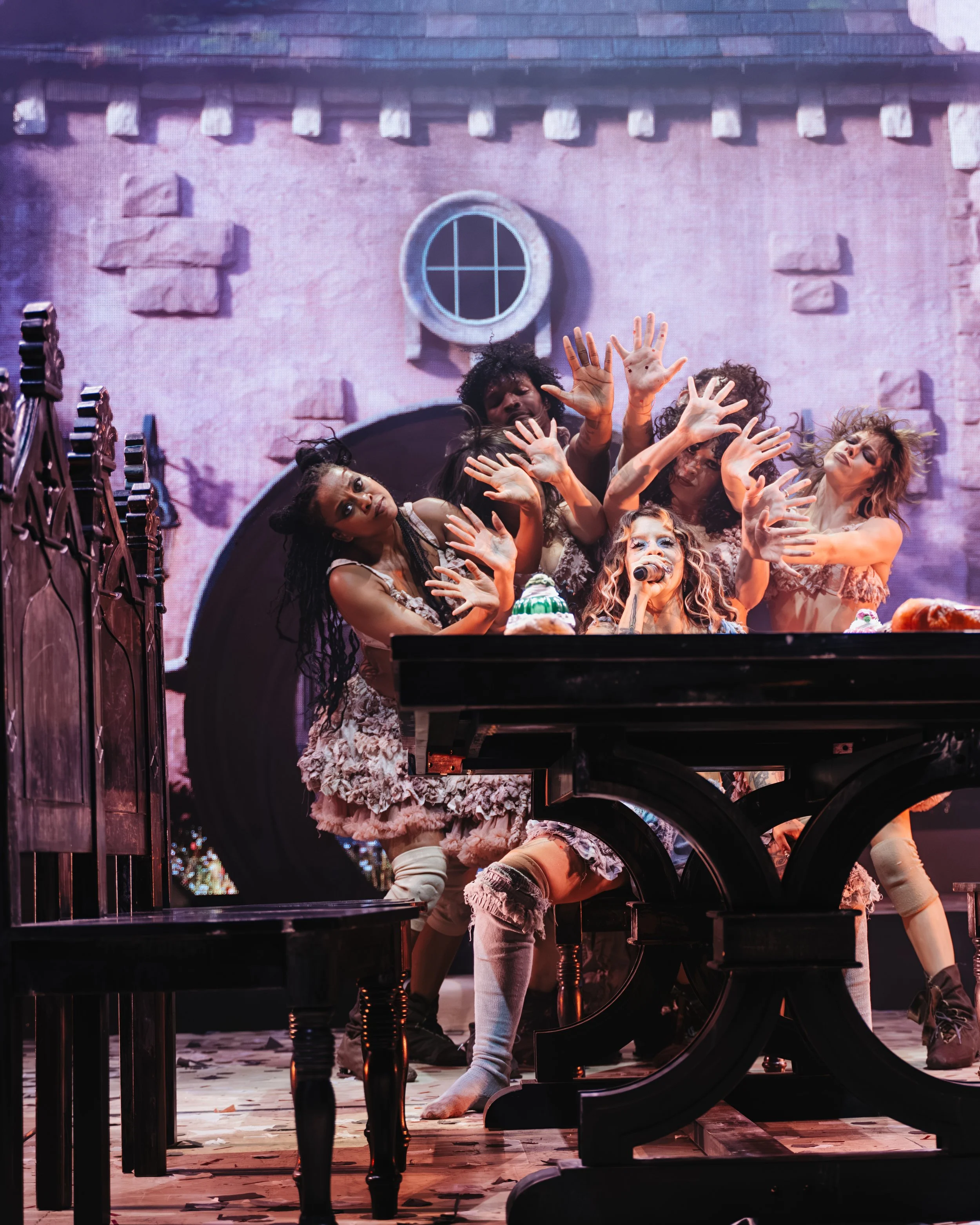
Martinez was spun around a massive dinner table by one of her dancers. The whole scene played out like a corrupted royal banquet. It was beautiful in the way a fairytale can be beautiful just before something goes terribly wrong.
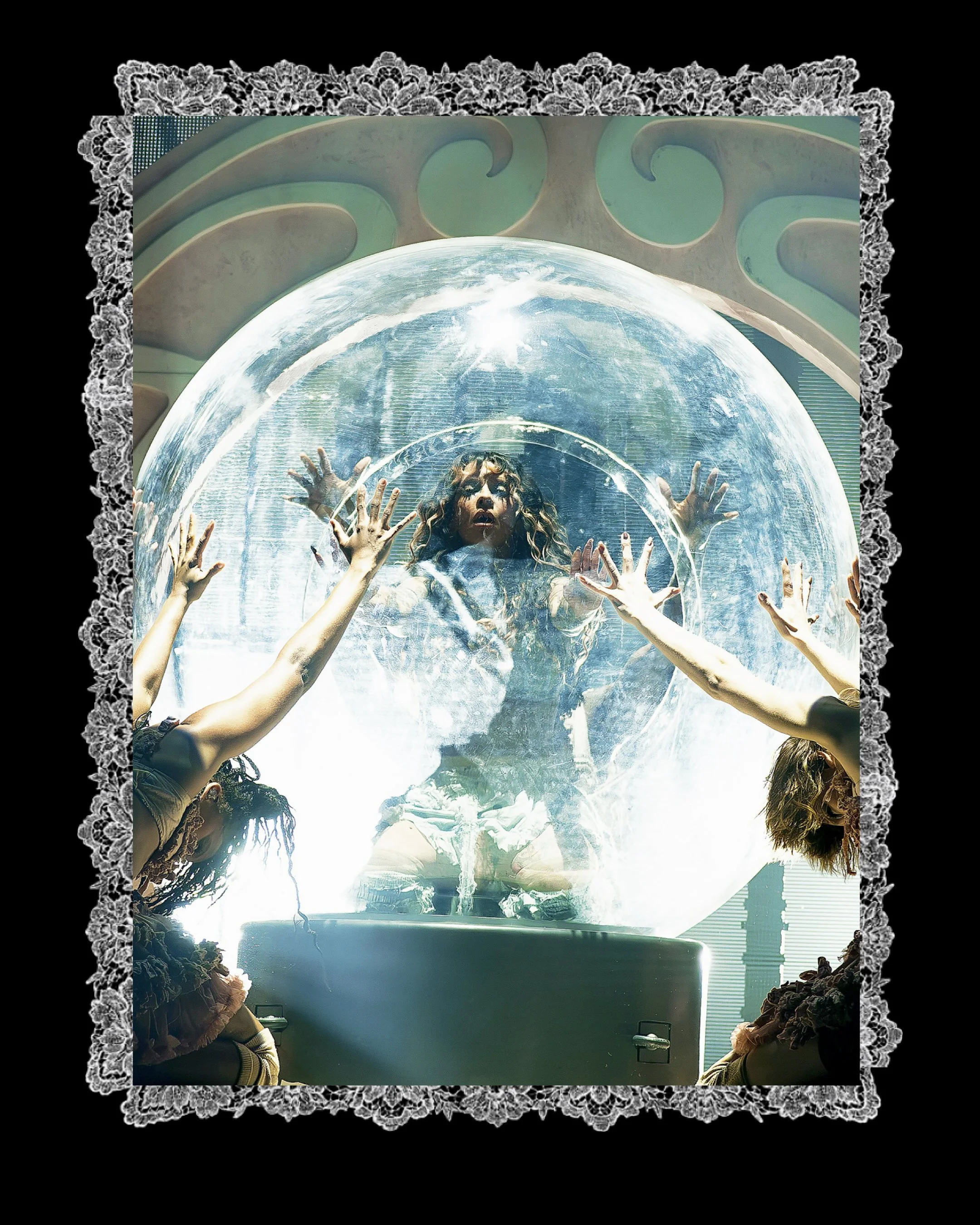
With “Grudges,” Martinez appeared inside a translucent orb while dancers circled around her and sparks flashed through the darkness. From behind a camera, these moments were exciting to photograph. Always something moving, flashing or disappearing before I could fully take it in. At the B stage, “Monopoly Man” was saturated in red. Turning Martinez into a figure nearly swallowed by the color. “Avoidant,” brought a selected fan onto the stage where Martinez sang directly to them. The arena sunk around the two of them.
“Monolith” was quieter. The B stage was suspended in a dim constellation of tiny lights. It was one of the most beautiful moments of the evening because there was no grand spectacle to hold attention. The audience did the work themselves with their held lights becoming part of the production.




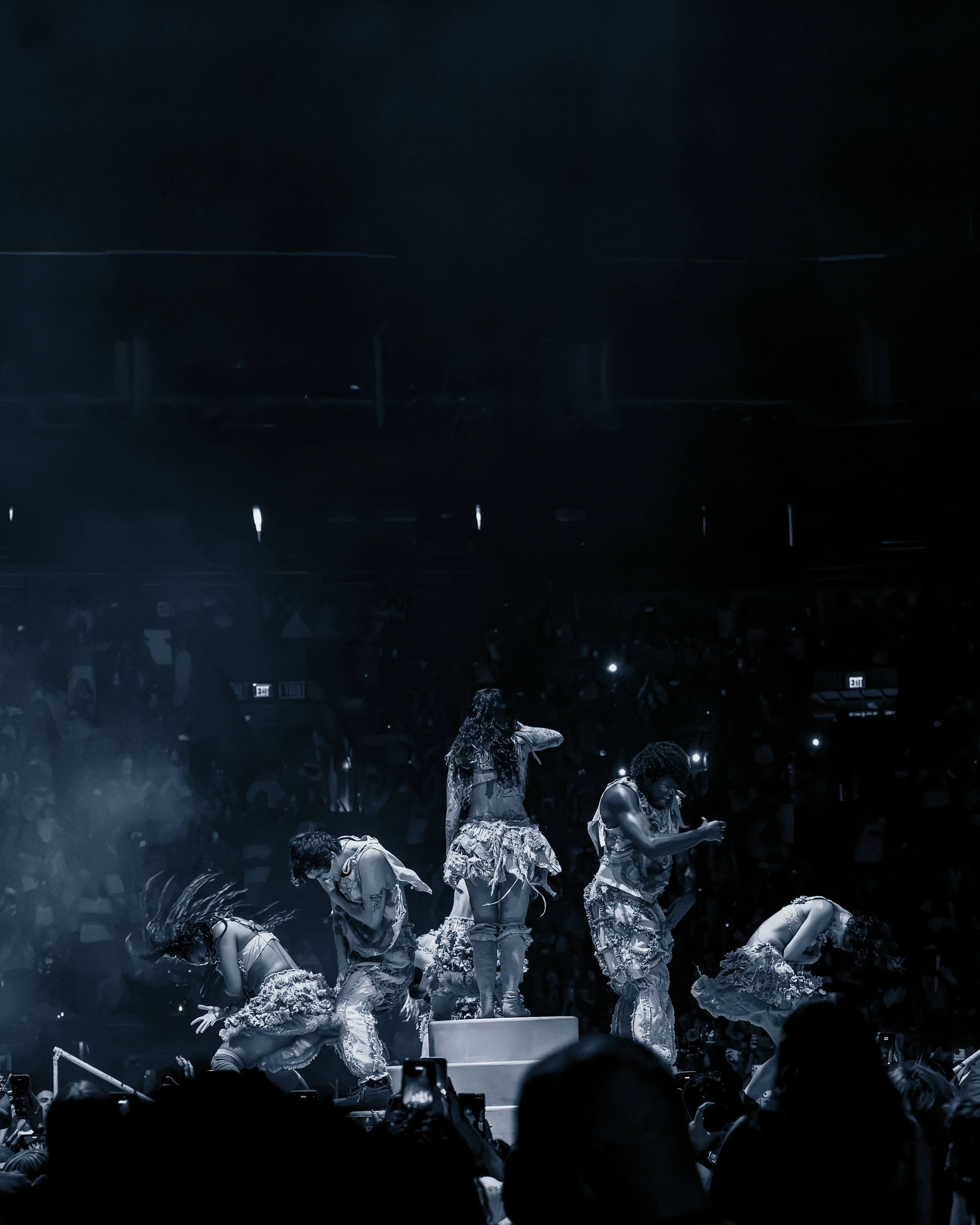
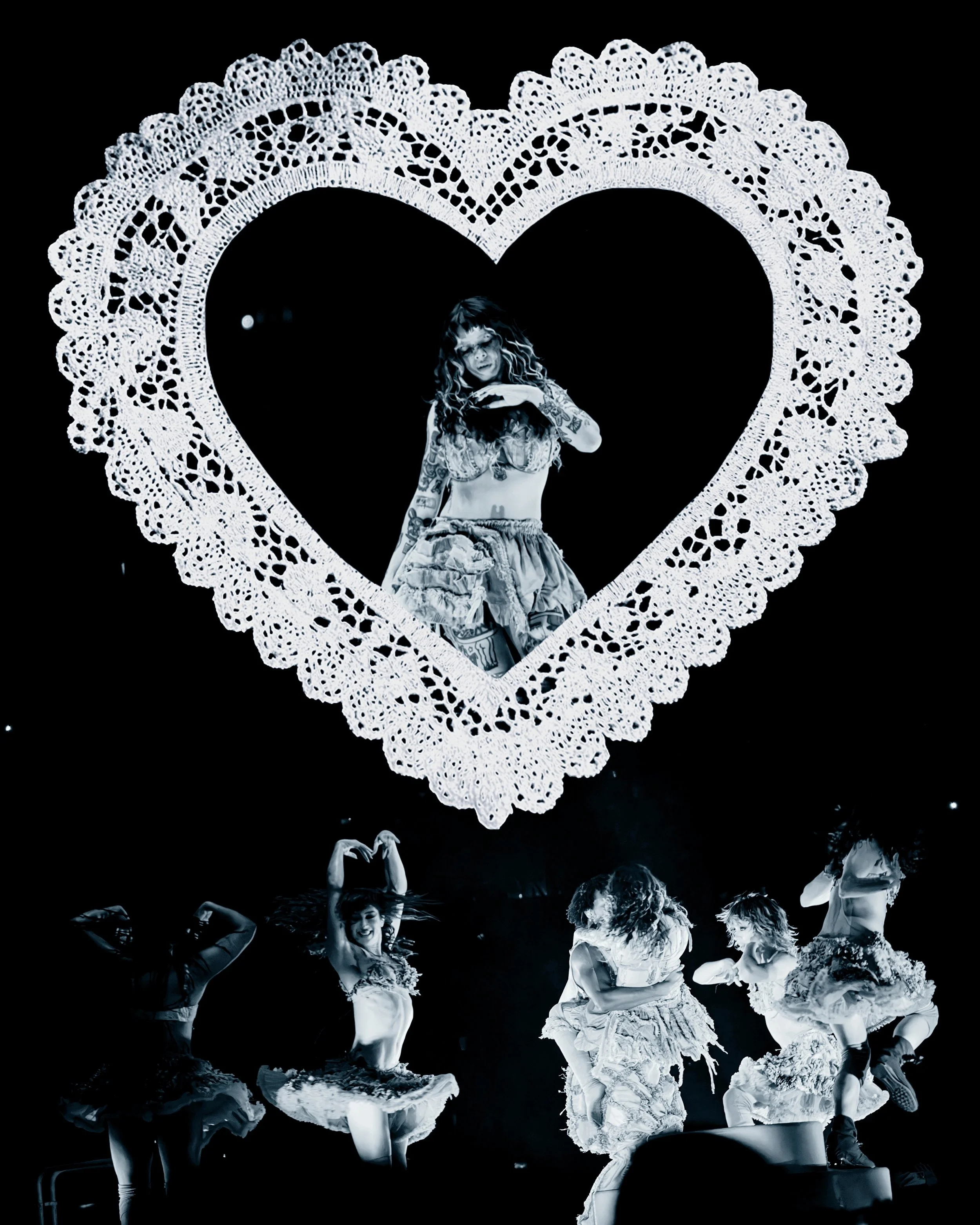
“Weight Watchers,” and the theatrical machinery returned. Martinez crawled through the crowd toward the B stage while dancers moved around her with long ribbons. One by one, they passed down fake organs until there was barely anything left. The imagery was grotesque, but deliberately so. It fit the larger story of HADES, where the body, identity and autonomy are repeatedly treated as things that can be extracted, manufactured and consumed.
“The Plague” was a crowd of fans watching the past die. Figures resembling earlier versions of Martinez appeared before seemingly succumbing to illness. An eerie nod to the characters and eras that came before HADES. When eruption broke through, I suddenly felt like the past wasn’t dying… the performer was burying parts of it. HADES is built around sacrifice, and the sacrifice is not only the character, Circle’s. Bits of Martinez’s previous artistic identity was being shed here, too.

“Batshit Intelligence” fluttered bats across the castle backdrop. “Gutter” and “Uncanny Valley” continued the album’s uneasy examination of society, technology and the strange spaces created between people. Martinez takes aim at online culture, manufactured identity, religious hypocrisy and the systems that turn people into products. The production gave those ideas physical form. “The Vatican,” performed with dancers in nun-like costumes was striking. “Hell’s Front Porch,” turned the arena ritualistic. The crowd held fake candles that glowed yellow and off-white. This was full participation into Martinez’s world.
The story of Circle was what stayed with me most. Between songs, small intermissions helped move the narrative forward. One line in particular lingered with me. “I feel like a fish in a fish tank, and there are your hands banging on the glass.” It made me think about the strange relationship between performer and audience. Especially within Martinez’s own mythology. Circle is created, watched, consumed and ultimately destroyed by the public’s obsession with her.

The audience was loving, but their love was enormous. Standing among thousands of people screaming for Martinez, I couldn't help wondering whether any outsider parasocialism had caught the meaning of the story at all.
“The Last Two People on Earth” sent HADES-themed confetti bursting into the crowd. The evening had traveled from cults and manufactured fame to isolation, technology. Left with whatever remains after everything else has been stripped away.
I spent part of the night looking through a viewfinder. Chasing sparks, movement and expressions in the brief seconds they existed in front of me. Later, I put the camera away and watched with everyone else. Martinez had built a show elaborate enough to photograph from every angle, but the fans did not need a camera to make it feel important. They screamed. They cried. They sang every word. They wore the mythology on their bodies.
Article by: Kili Goodrich

Plug In. Tune Out.
Melanie Martinez is a singer-songwriter and visual artist known for turning deeply personal stories into elaborate worlds built around music, character and cinematic imagery. Since Cry Baby, she has developed a distinct aesthetic. A blend of childhood nostalgia with darker themes of identity, trauma, relationships and transformation. Across albums like K-12, PORTALS and HADES, Martinez continues to reinvent her mythology while making each era its own universe.